Leads are not revenue: why Marketing and Sales need one pipeline
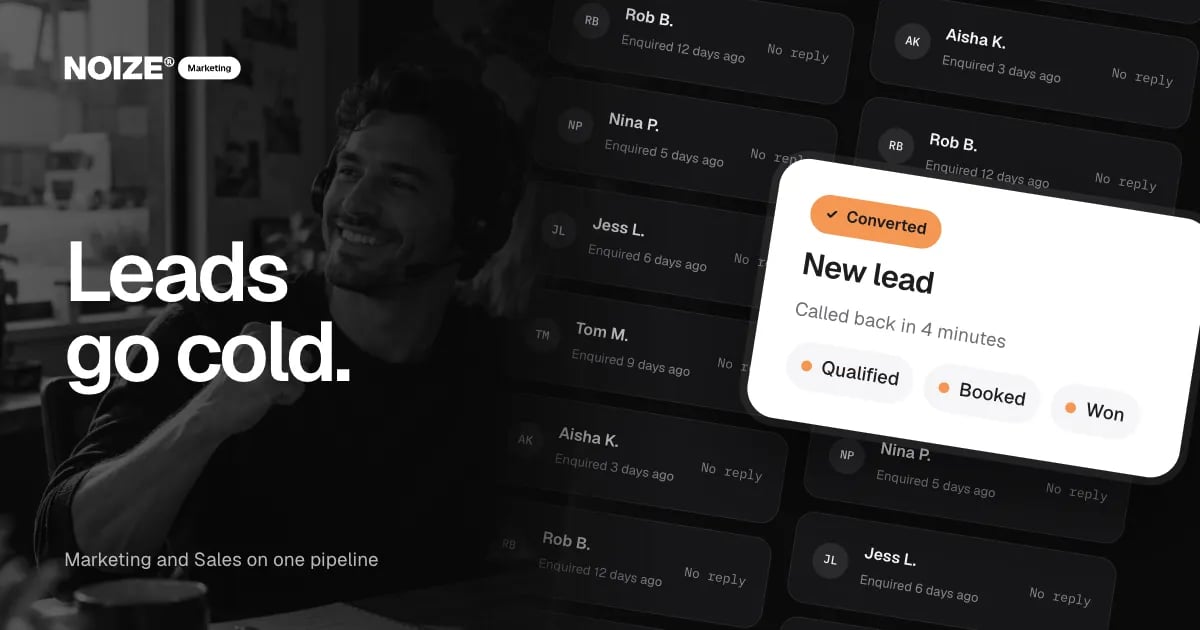
Jess enquired six days ago. Tom, nine days ago. Aisha, three days ago. Rob, twelve days ago. None of them has had a reply. Each of them clicked an ad the business paid for, filled in a form and waited. By now, most have found someone else.
This is where a large share of marketing budgets disappear. Not in bad targeting or weak creative, but in the gap between the enquiry and the first conversation. Marketing says the leads are good. Sales says they aren't. Both are partly right, and neither owns the gap.
The short version
- Leads only become revenue when Marketing and Sales work as one system.
- Agree in writing what a qualified lead is.
- Respond to every enquiry fast, ideally within the hour.
- Run one pipeline both teams can see, from first click to signed deal.
- Follow up on a set rhythm, report on customers rather than leads, and review the whole funnel together.
- More of the leads you already pay for will become customers.
Why leads go cold
01Slow response
The longer an enquiry waits, the less likely it is to become a conversation. People enquire when the problem is front of mind, and they contact several businesses at once.
02No clear owner
When enquiries land in a shared inbox, everyone assumes someone else has replied.
03No agreed definition of quality
Marketing counts every form as a lead. Sales only values certain types of customer. Without an agreed definition, each side blames the other.
04No follow-up rhythm
One call, one email, then silence. Most deals need several touches.
05Separate systems
Marketing reports from ad platforms. Sales works from a spreadsheet or memory. Nobody can see what happened to each lead.
How to make Marketing and Sales one system
01Define a qualified lead together
Write down what makes a lead worth pursuing: type of customer, size of need, location, timeframe. Marketing targets those people. Sales commits to following them up.
02Set a response time and route leads automatically
Every enquiry should go straight to a named person with an instant acknowledgement to the customer. Aim for a real response within the hour during business hours.
03Use one pipeline
Leads flow from the website into the CRM with their source recorded. Both teams see every stage: new, contacted, qualified, proposal, won or lost.
04Follow up on a rhythm
A planned sequence of calls, emails and messages over the following days and weeks. Automate the reminders and keep the conversations personal.
05Feed results back to Marketing
When Sales marks leads as won, lost or poor fit, Marketing learns which campaigns produce customers and adjusts targeting and spend.
06Review the funnel together
A short monthly meeting looking at leads by source, response time, conversion and revenue keeps both teams accountable to the same outcome.
> I've generated more than 100,000 leads and taken thousands of sales calls, so I've sat on both sides of this argument. The fastest growth I ever saw came the month we stopped arguing about lead quality and simply started calling everyone back within the hour. Conversion jumped before we changed a single ad.
“Couldn't recommend these guys enough.”
An illustrative example
Picture a renovation business spending well on Google and Meta. Enquiries arrive by email and are answered when the owner finds time, often days later. Connecting the forms to a CRM, assigning every lead to a named person, sending an instant acknowledgement and setting a five-touch follow-up sequence changes the picture. The ad spend doesn't change. Booked consultations rise because enquiries are answered while customers are still deciding.
Mistakes to avoid
- Don't let Marketing report on leads alone. Report on customers and revenue, so both teams work towards the same number.
- Don't over-qualify too early. Some leads that look small become valuable. Agree how to handle borderline leads rather than ignoring them.
- Don't automate the human out of it. Automation should make fast, personal follow-up easier, not replace it.
And don't run the systems separately. If Marketing and Sales can't see the same pipeline, the gap will reopen.
Where Marketing and Sales fit at NOIZE
NOIZE Marketing hands leads to NOIZE Sales when they need converting, and Sales hands back to Marketing when the pipeline needs more leads. NOIZE Digital connects the website and CRM so the pipeline fills itself. Three departments, one system. See marketing.noize.com.au and sales.noize.com.au.
Questions to ask Marketing and Sales together
- What exactly counts as a qualified lead?
- How quickly do we reply, and who replies?
- Where are leads recorded, and can both teams see them?
- What happens after the first contact, and over how many days?
- How do we report outcomes back to Marketing?
- Which campaigns produced customers last month, not just enquiries?
Working through these in one meeting often fixes more than a new campaign would.
What good looks like
Every enquiry lands in the CRM with its source, gets an instant acknowledgement and a real reply within the hour. A follow-up sequence runs for every lead. Sales marks outcomes consistently. Marketing sees which campaigns produce customers and moves budget accordingly. Both teams review one funnel each month and agree on one number: revenue.
Where to start this week
Submit an enquiry through your own website and time how long it takes to get a reply. Then pull last month's leads and check how many were contacted within an hour, a day and a week. The answer usually shows where revenue is being lost.
How Marketing connects to the rest of NOIZE
Every department leans on the others, and this one is no exception. NOIZE Digital builds the landing pages, tracking and CRM connections that turn clicks into measurable enquiries. NOIZE Sales follows up every lead quickly and records the outcome, so Marketing learns which campaigns produce customers. When the business needs extra hands, NOIZE Talent can provide them. One plan runs through all of it, which is why attention becomes growth instead of just traffic. NOIZE Strategy defines who the business is for and what it should lead with, so campaigns target the right people with the right offer. NOIZE Creative builds the brand and the ideas that make ads worth stopping for.
Related reading
- Attention is easy. Growth is harder: measuring the marketing that matters
- One plan instead of five channels
Common questions
What is marketing and sales alignment?
Marketing and Sales working to a shared definition of a qualified lead, one pipeline, agreed response times and common revenue goals.
How fast should we respond to leads?
As fast as possible, ideally within the hour during business hours. Speed is one of the strongest drivers of conversion.
What is lead nurturing?
Staying in helpful contact with leads who aren't ready to buy yet, through planned follow-up until they are.
Do we need a CRM to align marketing and sales?
A CRM makes it far easier, because both teams can see every lead and its outcome.
Who should own lead follow-up?
A named person or team for every lead, with clear response targets.
How do we measure lead quality?
By how many leads from each source become customers and how much revenue they produce.
Your first strategy conversation is on us.
Have a chatThe brand for business.