Attention is easy. Growth is harder: measuring the marketing that matters
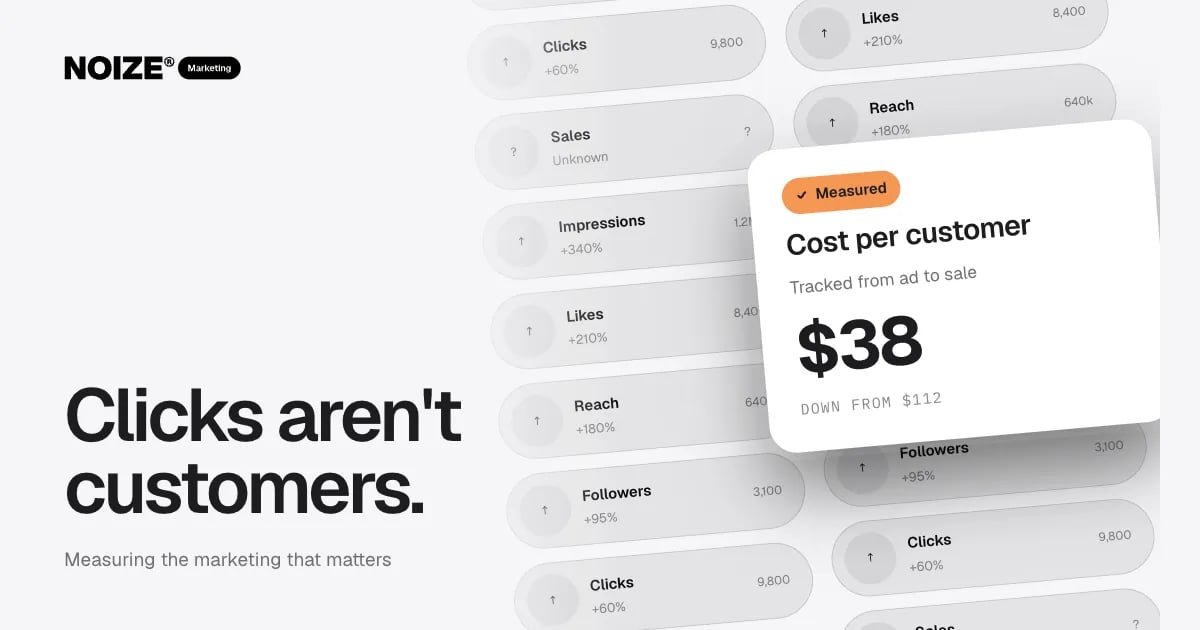
The monthly report looks great. Impressions up 340 per cent. Likes up 210 per cent. Reach, followers and clicks all climbing. Then someone asks the obvious question: how many customers did it bring in? And nobody can answer.
Plenty of clicks, not many customers. It is one of the most common frustrations owners bring to us, and it usually has the same cause. The marketing is being measured by the numbers that are easiest to grow, not the numbers that grow the business.
The short version
- Attention is easy to buy and easy to report.
- Growth is harder.
- Measure marketing by qualified enquiries, conversion to customer and cost per customer, tracked from the first click through to the sale.
- That requires connecting ad platforms, the website and the CRM, and agreeing which numbers matter before the campaign starts.
- Once you can see which channels produce customers, you can move budget towards them with confidence.
Why vanity metrics take over
01They are easy to see
Every ad platform reports impressions, clicks and engagement automatically. Revenue is harder to attribute, so it often isn't reported at all.
02They always go up
Spend more and impressions rise. Post more and likes rise. These numbers make campaigns look successful even when sales are flat.
03Each supplier reports its own
When channels are run by separate suppliers, each one reports the metric that flatters its work. Nobody owns the full picture.
04The sale happens somewhere else
The click is recorded by the ad platform. The enquiry lands in an inbox. The sale is recorded in accounting software. Without connecting them, marketing never sees its real result.
The numbers that matter
01Qualified enquiries
Not all enquiries are equal. Count the ones that match your best-fit customer, by channel and campaign.
02Conversion rate
The percentage of qualified enquiries that become customers. It shows whether the leads are good and whether sales follow-up is working.
03Cost per qualified enquiry
Total spend divided by qualified enquiries. Useful for comparing channels on a like-for-like basis.
04Cost per customer
Total marketing spend divided by new customers. The single most useful number for deciding where to spend next.
05Customer value
What a customer is worth over time. It tells you how much you can afford to pay to acquire one.
06Return on spend
Revenue or gross profit generated, compared with marketing spend. The number that tells you whether marketing is an investment or a cost.
> I've generated more than 100,000 leads, and the turning point in every business was the day we could see cost per customer by channel. Budgets that had been split by habit got moved by evidence within a month. Some channels we loved turned out to be our most expensive. Some we'd ignored were the cheapest.
How to track from ad to sale
- Tag every campaign. Use consistent tracking parameters so every visit carries its source.
- Track actions on the website. Form submissions, calls, bookings and purchases recorded as conversions.
- Pass the source into the CRM. Each new lead record should show which campaign and channel it came from.
- Record the outcome. When a lead becomes a customer, the CRM should show it, ideally with the sale value.
- Report from the CRM, not the ad platform. The ad platform tells you about clicks. The CRM tells you about customers.
This is where Marketing works with NOIZE Digital, which connects the website, forms and CRM, and NOIZE Sales, which makes sure every lead is followed up and recorded properly.
“The top marketing agency I've worked with on the Gold Coast.”
An illustrative example
Picture a home services business spending across Google, Meta and a local directory. The reports show Meta driving the most clicks and engagement. Once tracking connects through to the CRM, the picture flips: Google produces fewer clicks but most of the booked jobs, the directory produces almost none, and Meta works best for retargeting people who already visited. Budget moves accordingly. Spend stays the same. Jobs booked rise because the money finally goes where the customers are.
Questions to ask before your next campaign
- What does a qualified enquiry look like for us?
- How will we know which campaign each lead came from?
- Where will we record whether a lead became a customer?
- What can we afford to pay for a new customer?
- Who is responsible for reporting the result?
If those answers are clear before the campaign launches, measurement takes care of itself.
A simple monthly review
Once tracking is in place, review five numbers each month: spend by channel, qualified enquiries by channel, conversion rate, cost per customer and return on spend. Then make one decision: where would the next dollar do the most work? Small, regular adjustments based on those numbers compound into a far more efficient marketing plan.
Mistakes to avoid
Measuring too many things is almost as bad as measuring the wrong things. A dashboard with forty metrics gets ignored. Pick the five that matter and report them consistently.
Don't judge a channel on a single month. Some channels, like search and content, build slowly. Others, like retargeting, look efficient because they reach people who were already likely to buy. Look at trends over a quarter and at how channels work together.
Finally, don't let measurement stop at the lead. If the CRM doesn't record whether leads became customers, the most important number is still missing. Marketing and Sales need to agree how outcomes are recorded, and stick to it.
Where to start this week
List every channel you spend on and, next to each, write how many customers it produced last month. If you can't fill in the second column, that is the first problem to solve. See marketing.noize.com.au.
Related reading
- One plan instead of five channels
- Reach buyers, not bystanders: getting paid ads in front of the right people
Common questions
How do I measure marketing ROI?
Track revenue or gross profit from customers acquired through marketing and compare it with marketing spend, using a CRM to connect leads to sales.
What are vanity metrics?
Numbers like impressions, likes and followers that are easy to grow but don't directly show business results.
What is cost per acquisition?
The total marketing cost divided by the number of new customers it produced.
Do I need a CRM to measure marketing?
It makes it far easier. The CRM connects the lead source to the eventual sale.
How long before marketing results can be measured?
Tracking can be set up quickly. Meaningful results depend on your sales cycle, often weeks for simple purchases and months for considered ones.
Which marketing channel is best?
The one that produces customers at the lowest cost for your business. Measurement is how you find out.
What is a good cost per customer?
It depends on what a customer is worth to you. If a customer is worth several thousand dollars over time, a higher acquisition cost can still be very profitable. Work out customer value first, then set a target.
Why do my ad platform results not match my sales?
Ad platforms count clicks and conversions their own way, often claiming credit for the same customer. The CRM, connected to actual sales, gives the more accurate picture.
Your first strategy conversation is on us.
Have a chatThe brand for business.