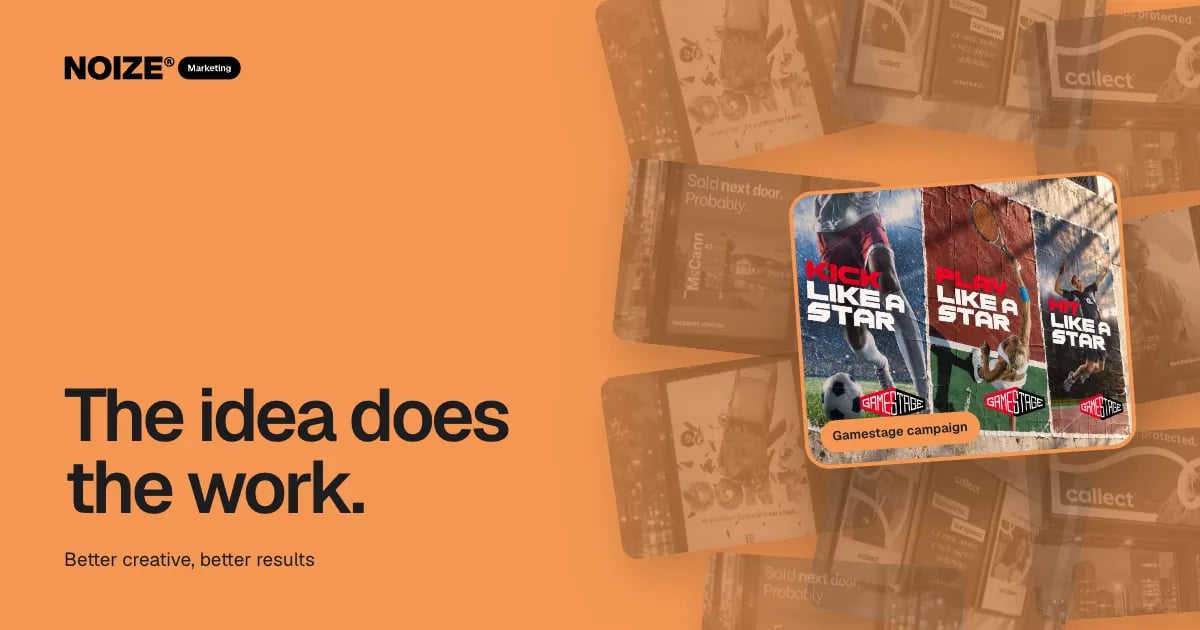
Better creative, better results: the idea behind every campaign
A few years ago, the advantage in paid media came from targeting. Whoever understood the platforms best could find customers more cheaply. Today, the platforms do most of the targeting automatically, and every advertiser has access to the same tools. The audience you can reach is much the same as your competitor's.
What differs is what those people see. The creative, the idea, image, words and format of the ad, has become the biggest lever on campaign performance. A strong idea lowers costs across every channel. A weak one makes even perfect targeting expensive.
The short version
- With targeting increasingly automated, creative decides whether people stop scrolling, understand the offer and act.
- The best campaigns start with a clear idea rooted in the customer's problem, express it consistently with the brand and test genuinely different concepts rather than small tweaks.
- When Marketing and Creative work together, testing produces lasting insight about what your customers respond to, and every channel gets cheaper.
Why creative matters more now
01Platforms target for you
Automated targeting finds people likely to engage with the ad. The ad itself now does much of the targeting.
02Attention is shorter
People decide in a fraction of a second whether to stop. Creative that doesn't earn that moment is never seen.
03Feeds are crowded
Ads compete with friends, news and entertainment, not just other ads. Generic creative disappears.
04Costs reward relevance
Platforms reward ads people engage with by charging less to show them. Better creative literally costs less to run.
What makes creative work
01A clear idea
One message, rooted in a real customer problem or desire, that can be understood instantly.
02A strong first moment
The first second, image or line has to stop the scroll. Movement, contrast, a face or a surprising statement usually helps.
03Brand consistency
Distinctive brand assets make ads recognisable, so each one builds on the last instead of starting from zero.
04Native to the format
Creative designed for vertical video, square feed posts or search ads performs better than one design squeezed into every format.
05A clear next step
People should know exactly what to do and what they will get.
Testing ideas, not colours
Most creative testing compares small variations: button colours, slightly different headlines. Those tests rarely teach much. The bigger gains come from testing genuinely different ideas: a product shot against a customer story, a price-led message against a problem-led one, a polished studio image against a real photo.
When different concepts are tested properly, the results reveal what your customers actually care about. That insight shapes future campaigns, the website and even sales conversations.
> I've presented on picking winning creative because it is the lesson that keeps paying. On one campaign we tested a polished product shot against a simple, human close-up. The human version won by a wide margin. It changed how we briefed every campaign after that.
“The branding and concept designs were fantastic.”
An illustrative example
Imagine a beverage brand running polished bottle shots across Meta. Results are steady but unremarkable. A test introduces three different ideas: the bottle in a lively bar scene, a close-up of people enjoying it and a bold typographic statement. The human close-up outperforms the others clearly. Future campaigns, social content and even the website hero shift towards people and moments rather than product alone, and costs fall across the board.
Mistakes to avoid
- Don't let the ad platform's templates decide your creative. They produce ads that look like everyone else's.
- Don't test too many things at once. Change one meaningful element between concepts so you know what made the difference.
- Don't abandon a winning idea too early. Refresh the execution before replacing the concept.
And don't separate creative from strategy. The best ideas come from understanding the customer, which is why Creative and Marketing plan campaigns together.
Where Creative and Marketing meet
NOIZE Marketing hands to NOIZE Creative when the campaign needs an idea, and Creative builds campaigns on the brand system so every ad strengthens recognition. Marketing runs the tests, reads the results and feeds the insight back. See marketing.noize.com.au and creative.noize.com.au.
Questions to ask before your next campaign
- What one idea should people remember?
- What problem or desire does it speak to?
- What will make someone stop scrolling in the first second?
- Does it use our distinctive brand assets?
- What genuinely different concepts could we test against it?
- How will we measure which idea wins?
A campaign brief that answers those questions gives Creative and Marketing a clear target.
What good looks like
Each campaign starts with a short brief based on customer insight. Two or three genuinely different concepts are tested. Results are measured on enquiries or sales, not engagement alone. Winning ideas are refreshed rather than replaced, and the insights shape the website, social content and sales conversations. Over time, the business builds a clear picture of what its customers respond to, and every channel gets more efficient.
Where to start this week
Line up your last ten ads. Cover the logo. Could they belong to a competitor? Do they share one clear idea? Then find your best-performing ad and ask what made it different. That difference is the starting point for your next test.
How Marketing connects to the rest of NOIZE
The value grows when this department works alongside the rest of the group. NOIZE Sales follows up every lead quickly and records the outcome, so Marketing learns which campaigns produce customers. When the business needs extra hands, NOIZE Talent can provide them. One plan runs through all of it, which is why attention becomes growth instead of just traffic. NOIZE Strategy defines who the business is for and what it should lead with, so campaigns target the right people with the right offer. NOIZE Creative builds the brand and the ideas that make ads worth stopping for. NOIZE Digital builds the landing pages, tracking and CRM connections that turn clicks into measurable enquiries.
Related reading
- Attention is easy. Growth is harder: measuring the marketing that matters
- One plan instead of five channels
Common questions
Why does ad creative matter so much now?
Platforms automate much of the targeting, so the creative is now the main way to stand out, earn attention and lower costs.
How do you A/B test ads?
Run two or more genuinely different versions to similar audiences, change one meaningful element and compare results on the actions that matter.
How often should ad creative be refreshed?
When performance starts to decline, often every few weeks to a few months depending on spend and audience size.
Should ads use real photos or polished designs?
Test both. Many businesses find real, human imagery performs better, but your customers decide.
What makes an ad stop the scroll?
A strong first moment: movement, contrast, a face, a clear benefit or a surprising statement.
Do ads need to match the brand?
Yes. Consistent brand assets make ads recognisable and help each campaign build on the last.
Who comes up with the campaign ideas?
NOIZE Creative develops ideas with Marketing, based on the customer insight and strategy.
Your first strategy conversation is on us.
Have a chatThe brand for business.